-
Don’t Panic : Yields up and why we welcome the news.
If you let the market be the market, it reacts in a fairly predictable manner. The trouble is that somebody always wants to “help.”
Here’s the setup: for the first time in a generation, investors can get genuinely attractive yields in the bond market. After years of bonds paying roughly what a savings account pays in lint, this is the equivalent of the all-you-can-eat buffet finally opening back up.
And what happens when word gets out about a good buffet? People show up. More buyers means more competition, and more competition means bond prices get bid up. When bond prices rise, yields fall, and when yields fall, mortgage rates follow.
Let me say that again because this is the key take-away:
When bond prices rise, yields fall, and when yields fall, mortgage rates follow.
In other words, high yields are the cure for high yields. It’s the one economic cycle that actually works the way the textbook says, as long as nobody grabs the steering wheel. Markets are like cats: leave them alone and they’ll eventually come around. Chase them with a rate hike and everything ends up under the couch.
So take a breath. The same high rates that are making your monthly payment look like a ransom note are also luring in the buyers who push those rates back down. Patience isn’t just a virtue here, it’s a strategy.
Time to get pre-qualified http://www.YourApplicationOnline.com
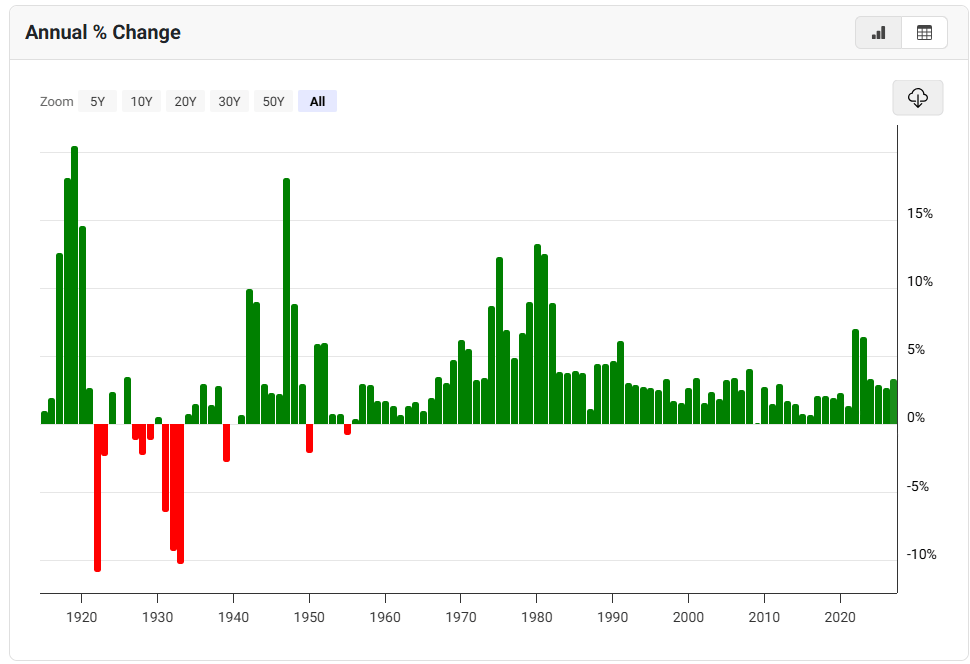
Inflation over time.
-
10y Bond is fighting the Good Fight. Treasury Note Auction very Strong.

Mortgage bonds are holding the line at a key ceiling of 5.29%. For context, when mortgage rates averaged 5.99% last February, the 10-year was at 3.99%.
Yesterday’s Treasury auction was strong, a good sign that the peak may be in front of us.
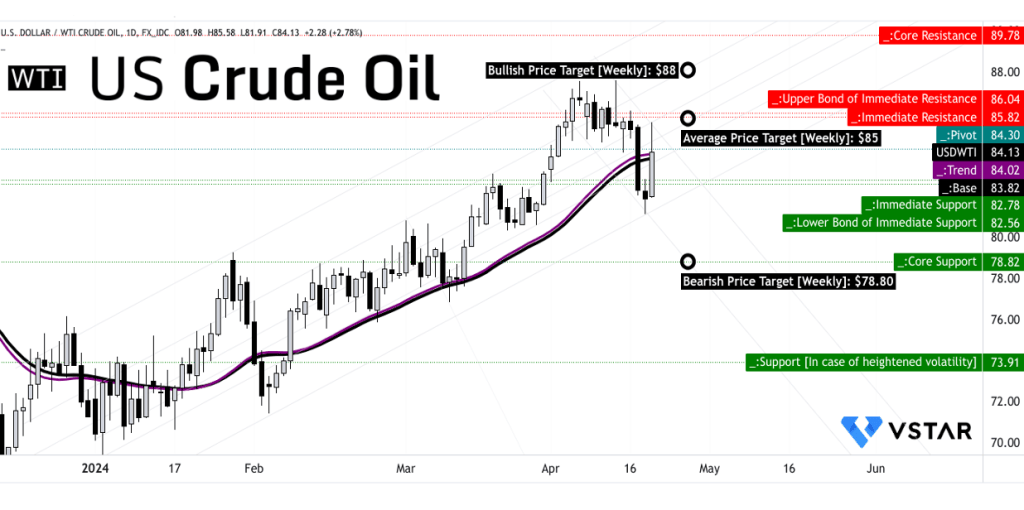
But oil is moving higher after reports that the President has asked the Pentagon for strike options on Iran ahead of the midterms. Markets don’t price in politics. They price in barrels.
The Fed says the current Fed Funds Rate is “not restrictive” or only “mildly restrictive.” Translation: they want to hike. I disagree, as I’ve said in many prior posts. The pain lands on the poor and middle class, not on the oil market.
You can’t raise rates to get out of the Iran conflict bag.
Time to get pre-qualified http://www.YourApplicationOnline.com
-
France says No QE for you… Global Bond Market reacts

France has a debt-to-GDP ratio problem at roughly 120%, and the EU isn’t happy about it. The EU has a bond-buying tool for countries whose bonds are collapsing, but France isn’t covered.
Like an expectant father with sympathy pains, bond markets around the world are feeling it too, with yields rising in sympathy.
The Cotality Home Price Index showed home values remaining relatively stable in August.
A CNBC/SurveyMonkey survey shows 87% of renters want to buy a home, and the biggest hurdle is affordability. I can say that from experience with my own kids in their mid-20s: rent is half or more of what it would cost to buy an equivalent home.
With higher interest rates, purchase volume is down 15% year over year, and refinances are down 56%.
We can get through this. Just remember, if the home you want is coming down in price, that helps offset the payment and lessens the blow of the higher interest rate.
http://www.YourApplicationOnline.com
-
What happens Across the Pond is helping our Bond market.

Softer economic data out of Europe is helping European 10-year yields move sharply lower, which in turn is helping global yields moderate.
France is talking Quantitative Easing (QE), or in real English, buying bonds. Not just a few billion here and there, but a systematic plan to buy tens of billions of bonds to help lower interest rates.
Reminder: Quantitative Tightening (QT) is what central banks have been doing for the last four years, reducing their bond holdings to shrink their balance sheets.
Quick reminder from yesterday’s post: To keep the same monthly payment you would have had when rates were 6.25%, today’s home price would need to be about 12% lower than it was last March.
Example: a $500K home last March would need to sell for about $440K today to keep the payment the same.
Time to get pre-qualified http://www.YourApplicationOnline.com
-
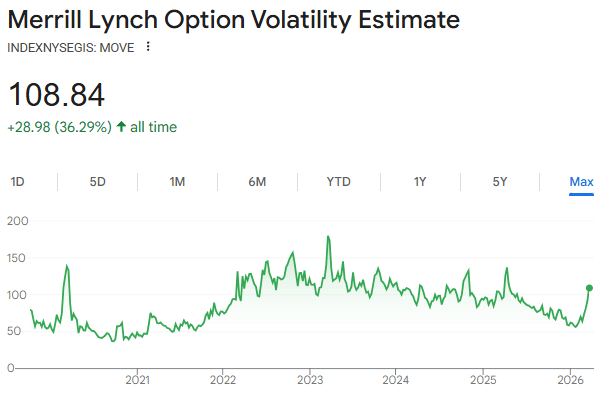
Move Index Volitivity. How to counter Higher Mortgage Rates.

A big part of the bond market volatility, even with underlying weakness in the economic data: bonds initially rallied following the cooler PCE report and much weaker jobs report, but those gains have evaporated.
It’s unclear why, but one possibility is Japan. They are the largest foreign holder of our debt, and they’re dealing with a weakening currency. The weaker it gets, the more expensive imports become, and they import a lot.
The other challenge, which we saw a few years ago when rates touched 8%, is the mortgage spread: the difference between the 30-year fixed rate and the 10-year Treasury yield. The wider the spread, the more volatility and risk the market is pricing in.
Part of the reasoning is that borrowers with high rates will refinance as soon as they can. Investors holding those mortgage bonds get paid back early, losing the high interest they were counting on, so they demand a higher return up front to make up for it.
How to Tackle High Interest Rates
A $100K loan at 6.25% has a principal and interest payment of about $615. At 7.5%, that payment is $699.
The question: How much smaller does the loan need to be at 7.5% to keep the payment at $615? About $88K. That’s a $12K reduction per $100K borrowed.
Scale that up: the payment on a $500K loan at 6.25% is the same as on a $440K loan at 7.5%, a $60K difference. It’s very likely that the home you looked at last spring is $60K less today.
If you want to have your cake and eat it too, with a lower home price and lower rates, you might be waiting a long time. Shift your mindset just a bit: focus on the total payment, not just the rate.
-
Bond Market Calm for now. Inflation cooler than expected.

Fed President John Williams: “There is no need for urgency, and the Fed has time to gather more information.”
Translation: A rate hike is unlikely.
Personal Consumption Expenditures (PCE) came in at 0.3% last month, one-tenth lighter than expected. Year-over-year, it dropped from 3.7% to 3.4% headed in the right direction at this point.
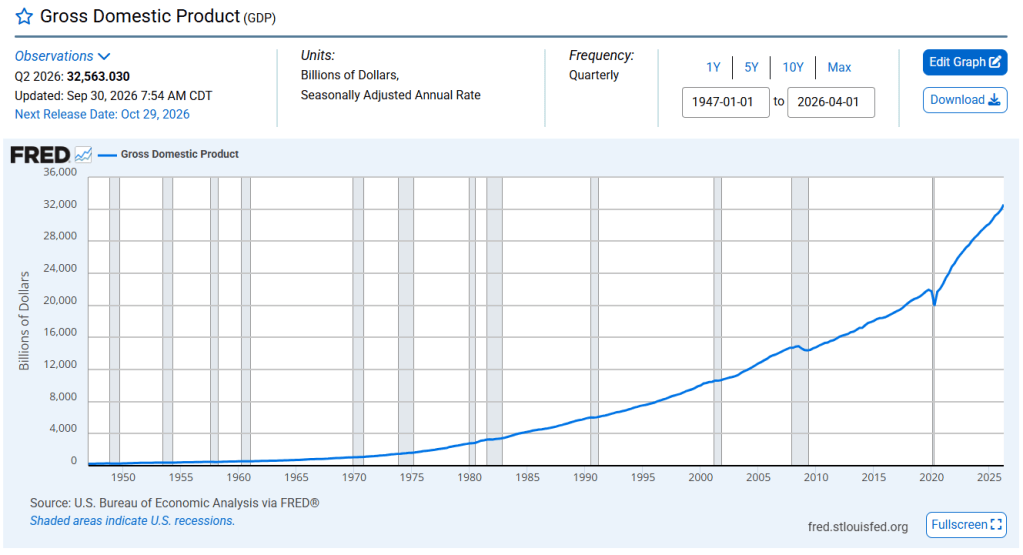
Q2 GDP came in at 2.2%, versus the 1.5% expected.
The ADP Employment Report showed 90,000 jobs created, versus 70,000 expected.
Mortgage applications were down, as expected, with rates still on the rise. Refinances made up 38% of transactions, with most being cash-out.
That’s a bit of a worrying sign. With rates as high as they are, and over one-third of applications being cash-out refinances, something is up. Time will tell.
Let’s get you pre-qualified http://www.YourApplicationOnline.com
-
Stocks Holding, Bonds dropping, Rates higher, Housing hanging on.

Mortgage Bonds are continuing lower, with yields higher, meaning mortgage rates keep climbing.
The housing market is stable for now, the way a Jenga tower is stable right before someone pulls the wrong piece. Rising rates mean shrinking approval amounts, and that pressure has to land somewhere, namely home values, as buying power quietly evaporates.
Until tariffs are removed, the Iran conflict ends, and fuel prices drop, we’re stuck standing on a chair missing a leg. Something has to give. Or everything does, all at once, which is the outcome nobody wants.
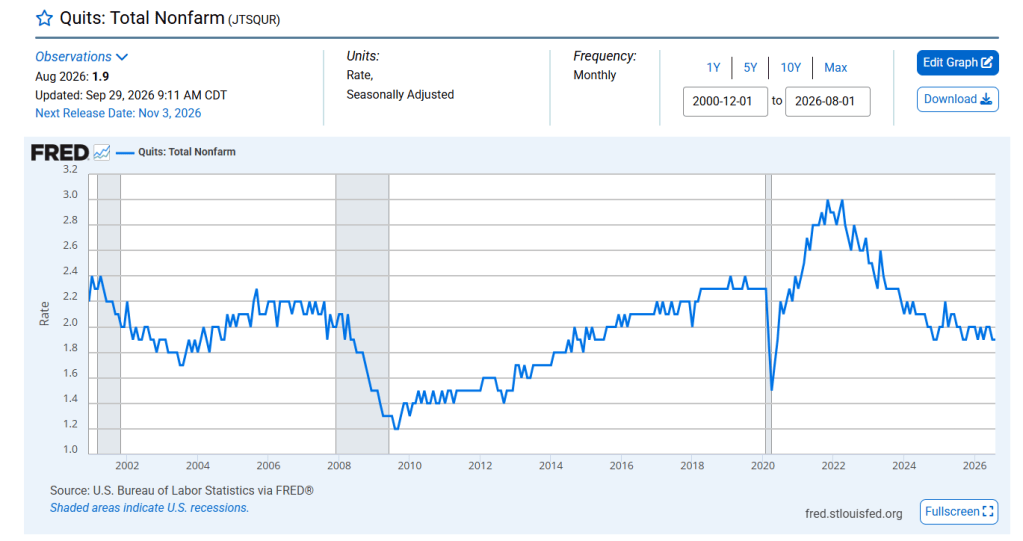
Job openings in August fell 256,000 to 7.08 million, missing estimates of 7.23 million. The labor market, politely declining to cooperate.
The telling number is the quits rate, still stuck at 1.9%, a measure of people confident enough to voluntarily change jobs. This low, it’s basically everyone deciding to sit very still, a strong signal of a weak job market.
-
What is Causing the Bond Market Rout. Rates clime to highest level in years.
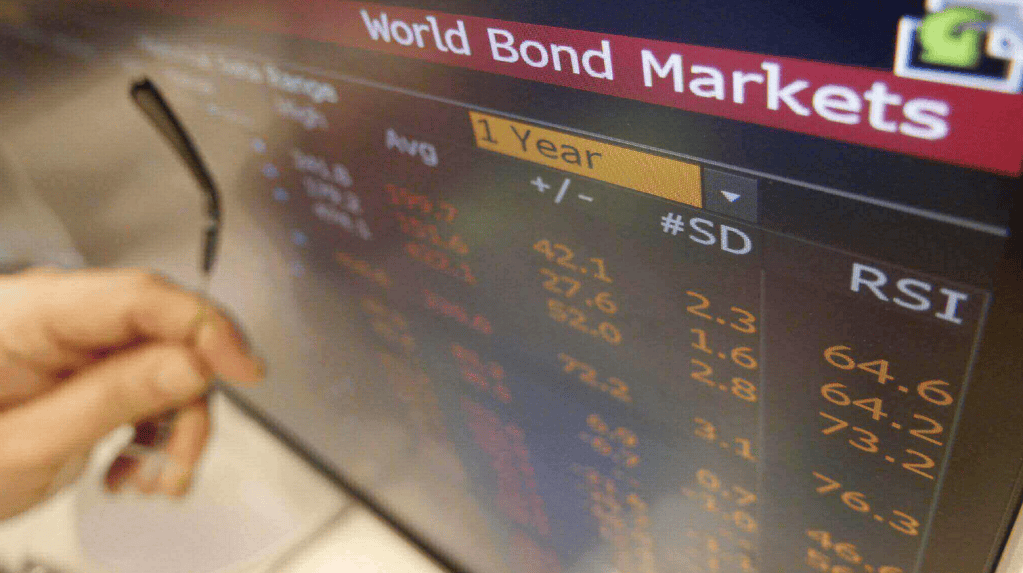
It’s a combination of four things:
- The S&P Global Manufacturing report showed the economy running hotter than expected, triggering expectations for more policy tightening.
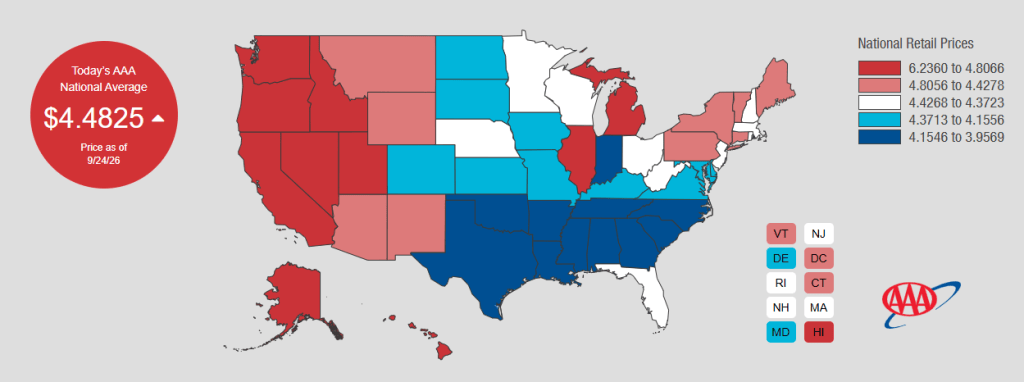
- Comments on inflation regarding average input costs for goods and services, which surged higher (oil) hit their highest level since 2022.
- Comments from Iran’s President at the UN, which were inflammatory.
- Fed Governor Michael Barr also contributed to the bond selloff, stating that further rate hikes are likely to be needed.
Suffice to say, it was a bad day yesterday, and today is shaping up to be the same.
Some good news: New Home Sales, signed contracts on new homes rose 6.4% in August, with an annualized rate of 684,000, much stronger than the 620,000 estimate.
Part of this may be due to builders incentivizing buyers with massive rate buydowns and lower prices to move inventory.
If rates remain high, a lot of buyers will stay on the sidelines. Inventory is up, and most markets are softening, meaning there are opportunities to snag a great home at a fantastic price, which can help offset higher interest rates.
http://www.YourApplicationOnline.com
-
What are the Consequences to escalatory remark(s) at the UN yesterday?

Threats of annihilation toward Iran, viewed by the markets as an escalation, sent oil prices and yields higher (meaning higher mortgage rates).
A representative who met with Iran described the discussion as very productive, lasting three hours. Later today, the Iranian President will be speaking at the UN, we’re watching this closely.
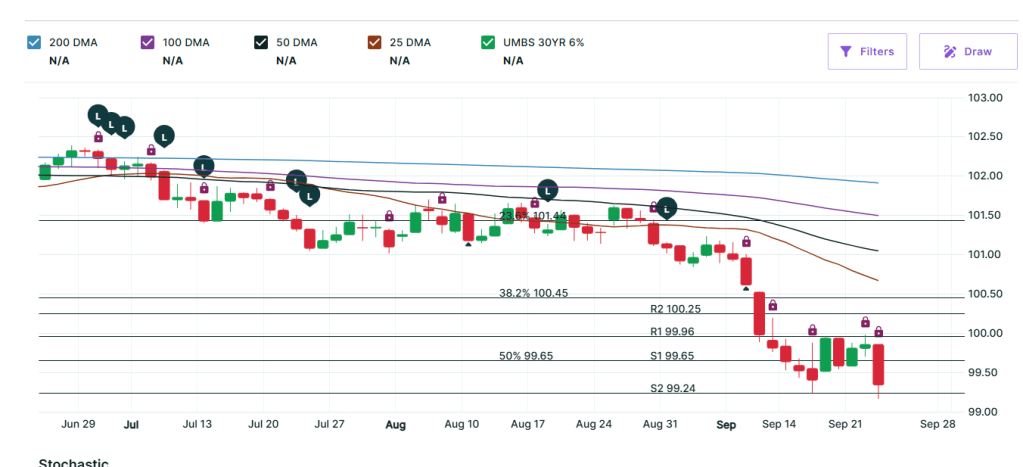
Volatility is exactly what the market dreads. As you can see from the graph below (down means higher rates), any sense of instability drives yields higher, resulting in higher mortgage rates.
ICE Home Price Index for September show home values remaining stable during the month. Year over Year, home prices nationwide are up 1.41%.
Time to get pre-qualified. http://www.YourApplicationOnline.com
-
Feds Job? Demand Destruction!

Demand Destruction: The Fed’s Favorite Party Trick
Let’s talk about “demand destruction”, which sounds like a Marvel villain’s origin story, but is actually just the Federal Reserve’s fancy way of saying “we’re going to make your life expensive enough that you stop buying stuff.”
That’s it. That’s the whole plan. No lasers, no secret lair, just interest rates, quietly turning your daily cup of coffee into a five-year financial decision.
Wait, What Even Is Demand Destruction?
In economist-speak: demand destruction happens when higher prices or higher borrowing costs cause people to buy less of something, which (in theory) cools off inflation.
On to other news…
Oil is down below $94 a barrel, Saudi Arabia may reopen their critical East to West pipeline.
There is increased economic pressure on Iran from the US, effectively shutting down their Airlines. The President is flying to NY to the US and we could have direct talks.
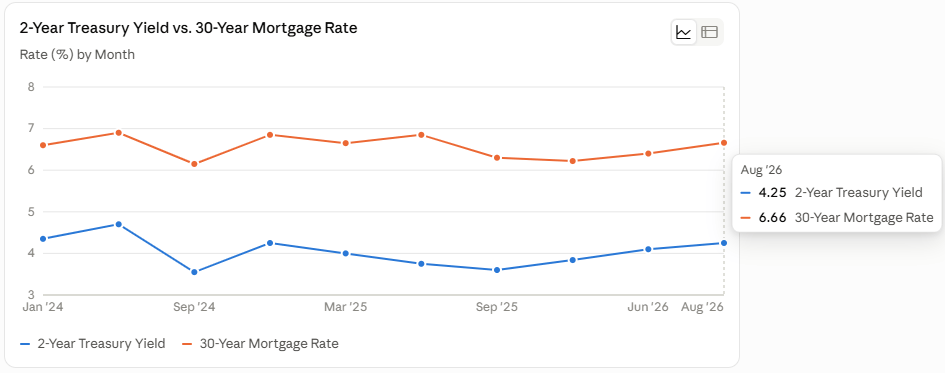
Graph below shows the relationship of the 2y bond to mortgage rates. Wonder what the rates are going to do? look at the 2y bond.
Time to get Pre-Qualified http://www.YourApplicationOnline.com
-
Subscribe
Subscribed
Have a WordPress.com account? Log in now.

